
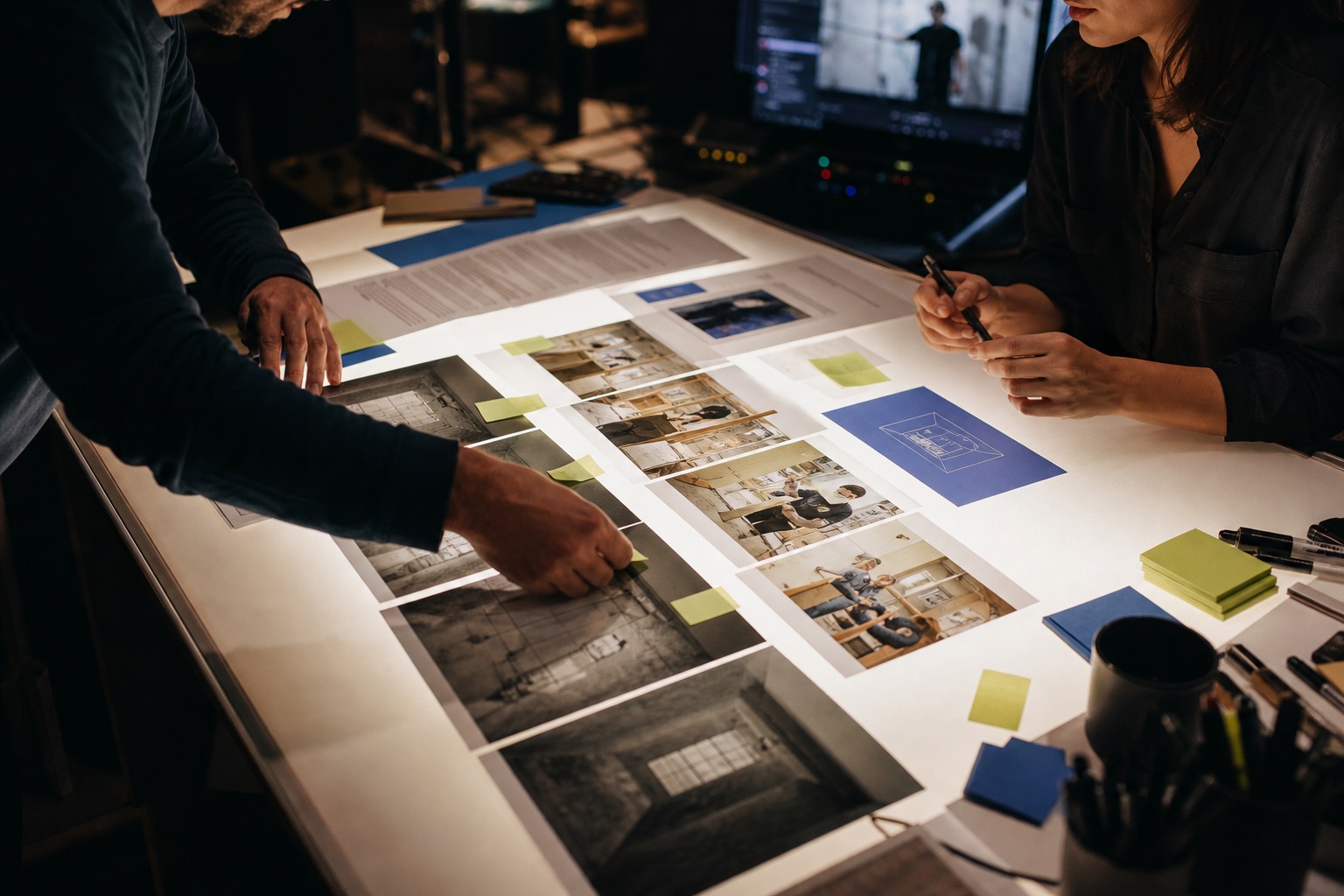
Find the decision inside the result
Results create interest, but decisions create a story people can learn from. Identify the moment when the client rejected an obvious approach, changed a constraint or committed to a new system.
That decision gives the narrative movement. It also demonstrates expertise more credibly than a list of services delivered.
Interview for specificity
Ask what the situation looked like before the project, what had already been attempted and what made the problem costly. Follow broad praise with requests for examples, observable changes and honest trade-offs. Our customer testimonial video question guide provides a ready-to-adapt interview sequence and neutral follow-ups.
- What was happening that made change necessary?
- Which assumption turned out to be wrong?
- What changed in the way the team worked?
- Which result can be shown, measured or independently understood?
Let evidence carry the ending
Use the client’s voice, real artefacts and measured outcomes wherever permission allows. Avoid turning the final minute into a general sales pitch that weakens the credibility built by the story.
A strong case study closes with what changed and what the audience can learn. The viewer should understand the value before being asked to take a next step.
Choose the version according to the question the viewer is asking. A short problem-led story can introduce an issue, while a detailed implementation account can address purchase risk. See where customer stories fit in the B2B video funnel before deciding the opening, evidence depth and next action.
The decision-led case study
A weak case study opens with the provider, lists services and ends with praise. A useful one opens with a situation the intended audience recognises: production was frequent but the assets felt disconnected, or a strong result could not be repeated. The turning point is the decision that changed the system, not the moment the supplier arrived.
The provider can appear through the quality of the diagnosis, process and evidence. This makes the story more persuasive because the audience can follow the cause of the change instead of being asked to accept a collection of positive adjectives.
Put the idea into the room.
Interview for sequence, not compliments. Ask what was true before, what made the old approach difficult, which decision changed the direction and what evidence became visible afterwards. The strongest quotes usually describe a moment of uncertainty or choice because that is where the audience recognises its own situation.
Check the decision before adding output.
- Is the before state specific enough for a similar audience to recognise?
- What decision changed the direction of the work?
- Which artefacts, observations or measured outcomes support the result?
- Does the ending teach a transferable lesson before asking for a next step?
Quick answers
Questions people ask about this topic.
What makes a good video case study?
A strong case study shows a recognisable before state, a consequential decision, the implementation, credible evidence of change and the limits of the result. It lets the customer’s experience and observable proof carry the story instead of relying on praise or a list of services.
How should a case study video be structured?
Open with the problem and its consequence, establish what had already been tried, reveal the turning-point decision, show how the change was implemented and end with specific evidence and a transferable lesson. Introduce the provider through the quality of the process, not as the main character.
Sources & further reading
Evidence you can inspect.
These references support the research-dependent parts of this field note. The practical recommendations and working frameworks remain editorial analysis.
- 01Enterprise Content Marketing Research Findings 2025 Content Marketing Institute
Survey evidence on the use and reported effectiveness of customer stories and case studies.
- 02How ThriveHive Launched Its First Video Series Wistia Customer Showcase
A documented video-series case connecting planning, production decisions and audience signals.
A practical next pass.
- 01Define the before state in observable terms that a similar audience can recognise.
- 02Record the turning-point decision and the reasoning behind it, not only the finished solution.
- 03Collect evidence that can be shown responsibly, including constraints and what did not change.
- 04End with the useful lesson the viewer can transfer to a different situation.