
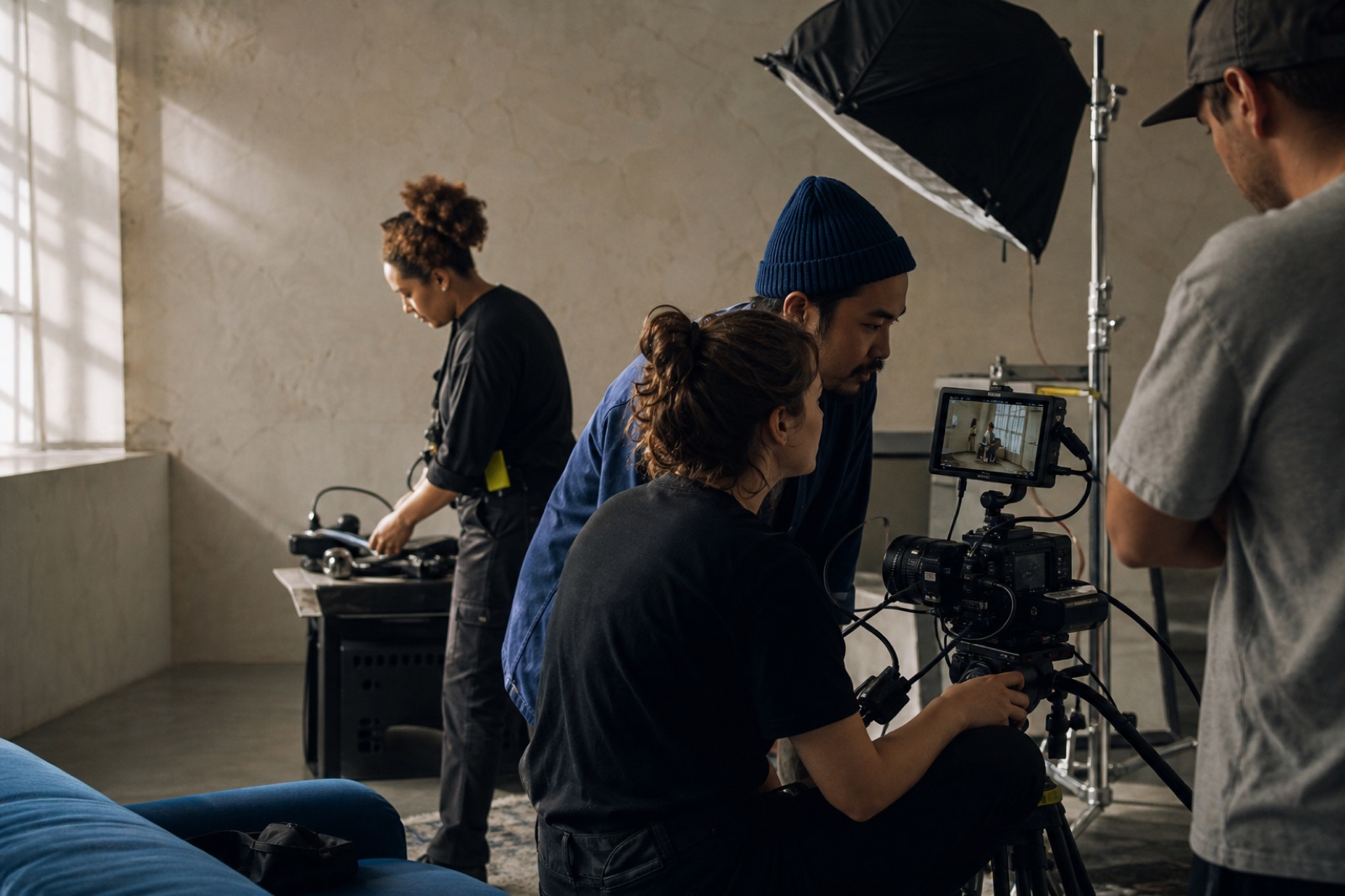
Define the job of the video
Begin with one audience and one intended action. A video designed to introduce an unfamiliar brand needs a different structure from one meant to answer objections near a purchase decision.
Write a one-sentence promise for the viewer and a one-sentence business objective. If either sentence contains three goals, the project is still too broad.
Turn the concept into production facts
A concept becomes producible when every scene has a location, subject, action, line, prop and approximate duration. This is where the team discovers whether the ambition fits the available time and resources. Turn those production facts into a phase-based estimate with the video production budget planning checklist before locking dates or comparing supplier quotes.
- Confirm the message hierarchy before polishing the script.
- List every person, product and location that must appear.
- Identify the shots that cannot be recreated after the day ends.
- Plan alternate versions while the original scene is already set.
Design for the edit
A shot list should provide more than coverage. It should give the editor a clear opening, visual proof, transitions and a decisive ending. Capture clean room tone, deliberate cutaways and enough variation to change pace without hiding weak material.
The best production plan is not the longest document. It is the one that lets everyone make the same film before the first frame is recorded.
Once the shoot plan is approved, carry those decisions into the complete video production workflow. It connects the plan to footage transfer, editing, review and delivery, with a receiving owner and an acceptance condition for each handoff.
A pre-production risk review
A founder interview may look simple on a call sheet, yet the edit can fail if the plan relies on one perfect answer, an unapproved claim or a location that cannot support clean sound. The risk review turns those assumptions into decisions: capture the claim in more than one form, identify the visual proof, confirm the approval owner and schedule the irreplaceable material before optional coverage.
This review is not an invitation to make the production document longer. Its purpose is to reveal the few uncertainties with the greatest effect on the finished piece. Once those are owned, the crew can work with more freedom because the essential structure is protected.
Put the idea into the room.
Run a short pre-mortem with the director, producer and editor before the final call sheet. Ask what would make the footage impossible to assemble, which moments cannot be recreated and which approvals could arrive too late. Converting those risks into shots and decisions protects both the idea and the production day.
Check the decision before adding output.
- Can everyone describe the viewer promise and intended action in the same words?
- Which claim or scene depends on something that has not yet been approved?
- What footage would make the edit impossible if it were missing?
- Which moments cannot be recreated after the location, contributor or product leaves?
Quick answers
Questions people ask about this topic.
What are the essential video pre-production steps?
Define the audience, viewer promise and intended action; confirm the message and evidence; translate the concept into people, places, actions and props; plan the edit’s essential shots; assign approvals; and schedule the irreplaceable material before optional coverage.
What should a video production plan include?
A practical plan includes the objective, audience, message hierarchy, proof, format and duration, script or story beats, locations, contributors, shot requirements, schedule, owners, approval points, usage needs and known risks. It should help the team make the same film, not simply create a longer document.
Sources & further reading
Evidence you can inspect.
These references support the research-dependent parts of this field note. The practical recommendations and working frameworks remain editorial analysis.
- 01Create new projects in Premiere Adobe Premiere Help
Current Adobe guidance on planning project structure, media and ingest settings.
- 02The Story Behind #OverheardAtCoSchedule Wistia Customer Showcase
A documented production example using briefs, storyboards and planned filming sprints.
A practical next pass.
- 01Write the viewer promise and business objective as two separate one-sentence statements.
- 02Turn every scripted beat into a production fact with an owner, location and approximate duration.
- 03Mark the irreplaceable shots and schedule them before optional variations or decorative coverage.
- 04Review the plan from the edit backwards to confirm there is visual proof for every important claim.